Friday, May 24, 2013

Dansko Thea - Podiatrist Recommended Comfortable Women's Casual Heels

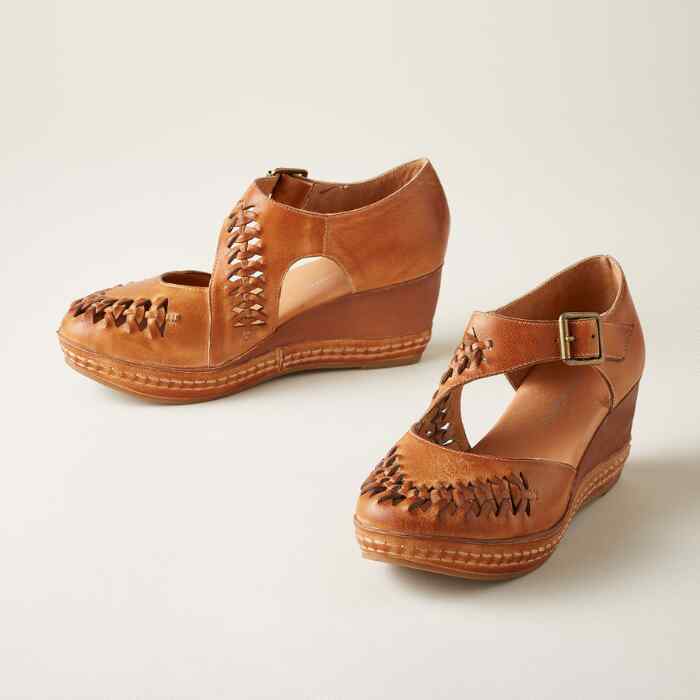
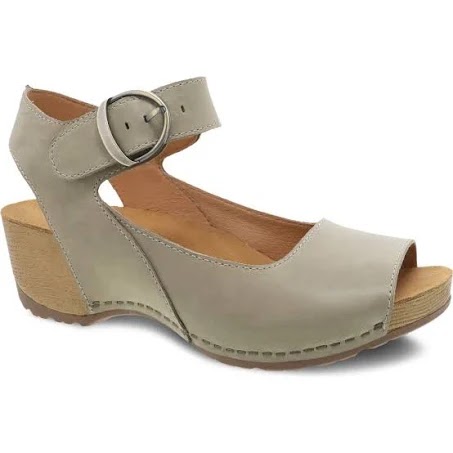
DANSKO THEA


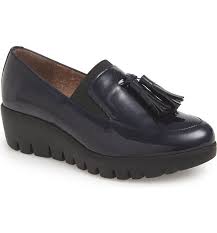
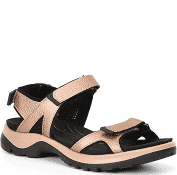
The Dansko Thea is a comfortable wedge heel for patients with certain foot types. What makes it so comfortable is that it has a thick, rigid sole that offers protection for the foot joints. If you have severe Hallux Limitus or Rigidus (limited range of motion at the 1st toe joint), this may not be the shoe for you. If you have mild to moderate Hallux Limitus, this sandal may be perfect for you as it will not allow any motion across the 1st toe joint, which allows for increased comfort and it may stop or slow the progression of the injury/deformity.

The Dansko Thea also has very good forefoot, midfoot and rearfoot control, provided by the straps, that helps with biomechanical control of the foot structures. The arch support is not excellent but it is adequate for most patients. I highly recommend that if you purchase a Dansko sandal, make sure you get one that has rearfoot strapping. If you don't have rearfoot strapping, you have to grip your toes down to stay in the shoes, which causes more mechanical strain to your foot and ankle structures as well as your knees, hips and lower back.


This Shoe is Recommended For Patients with:
*Mild Hallux Limitus (Decreased motion of the 1st toe joint)
*Mild Osteoarthritis
*Mild Achilles Tendonitis
*Mild Haglund's Deformity
*Mild Hypermobility
*Mild Tendonitis
*Previous (but healed) Lisfranc's Fracture or Injury (Please check with your doctor)
*Mild Bunions
*Mild Tailor's Bunion
*Mild Hammertoes
*Capsulitis of the toe joints
*Metatarsalgia
*Plantar Fasciitis (Heel Pain) 
*Mild Over-Pronation


This Shoe is NOT Recommended for Patients with:
* Diabetes
*Peripheral Arterial Disease (Poor Circulation)
*Peripheral Neuropathy (Nerve Damage)
*Charcot Foot 
*Moderate to Severe Hallux Limitus/Rigidus (Decreased or no motion of the 1st toe joint)
*Severe Fat Pad Atrophy (these patients need more cushion - try the Naot Paris) 
*Severe Over-Pronation
*Severe Hypermobility
*Severe Ligament Laxity
*History of Ulcerations 


I hope this has been helpful. 

Dr. Cathleen A. McCarthy

:)


Saturday, April 27, 2013

The Wolky Jewel - Podiatrist Recommended Comfortable Dress Sandal for Most Foot Types.


WOLKY JEWEL


This is an incredibly comfortable dress sandal for most foot types! 

What makes it so comfortable is the fact that is has a thick, rigid sole that offers exceptional protection for your foot joints as well as knee, hip and lower back. The built in arch support is excellent and the anatomical cork and latex footbed is removable so that it can accommodate a custom-molded insert if needed. It also has adjustable forefoot, midfoot and rearfoot strapping, which is crucial for increasing comfort, decreasing the risk of injury and decreasing mechanical strain of your joints, muscles, tendons and ligaments. 

If you're not sure about this sandal, find out what store in your area carries it and try it on and judge for yourself. This sandal is an investment in your feet that will pay off in abundance in that it will help to stop or slow the progression of bunions, hammertoes, neuromas as well as many other foot conditions and it will significantly help alleviate knee, hip and lower back pain. 


This Sandal is Recommended For Patients With:
*Mild to Moderate Bunions
*Mild to Moderate Tailor's Bunions
*Mild to Moderate Hammertoes 
*Morton's Neuromas
*Metatarsalgia
*Hallux Limitus (Limited range of motion of the 1st toe joint)
*Hallux Rigidus (No range of motion of the 1st toe joint)
*Mild to moderate Osteoarthritis
*Mild Degenerative Joint Disease 
*Achilles Tendonitis
*Plantar Fasciitis (Heel Pain)
*Mild Tendonitis 
*Mild Ankle Instability
*Mild Over-Pronation
*Mild Hypermobility 
*Patients who have healed after a Lisfranc's Fracture or Sprain
*Capsulitis
*Mild to Moderate Rheumatoid Arthritis
*Fibromyalgia Patients


This Sandal is NOT Recommended For Patients With: 
*Diabetics
*Peripheral Neuropathy (Nerve Damage)
*Peripheral Arterial Disease (Poor Circulation)
*History of Ulceration or Open Sores
*Charcot Foot
*Drop Foot


If You Have Any Of These Conditions, Check With Your Podiatrist To See If This Sandal Is Appropriate For You:
*Patients recovering from foot injuries or surgeries
*Severe Hypermobility
*Severe Over-Pronation
*Severe Instability
*Chronic Regional Pain Syndrome
*Reflex Systemic Dystropy
*Recovering from Avascular Necrosis
*History of Falling 


I hope this was helpful!


Have a wonderful day,

Dr. Cathleen A. McCarthy

:)


Saturday, April 13, 2013

Podiatry Recommended Comfort Sandals For Spring.

SUMMER DRESS SANDALS 


Dansko Scarlett


Sanita Darcy


Dansko Nina


These are three great options for a sandal that you can dress up or down for the summer season. The first two are going to work better for anyone who has Hallux Limitus (limited range of motion of the 1st toe joint) or any other forefoot problems that make it difficult or painful to wear heels while the Dansko Nina is a great option for someone who knows they can comfortably wear a heel.

What makes these three sandals superior to most are that they each have a thick, rigid sole that is protective of the foot joints. Less motion means less mechanical strain, which translates into less pain, decreased chance of injury and more comfort. Each sandal has forefoot, midfoot and rearfoot strapping, which is necessary for more comfort. If a shoe doesn't have a rearfoot strap, then you are forcing your joints, muscles, tendons and ligament to work harder to stay in the shoe. Instead of forcing your foot to do the work - make the shoe do the work!   

If you get 'tired legs' by the end of the day wearing flip flops or a backless sandal, try bumping up to one of these first two sandals. There are no good flip-flops! If your shoe does not have a thick rigid sole and rearfoot control, you are causing mechanical strain, which can promote all types of deformities such as bunions, hammertoes, osteoarthritis as well as knee, hip and lower back pain.

Remember, there are four requirements for a shoes: 
1. A thick, rigid sole (crucial!!)
2. Wide, soft toebox
3. Arch Support 
4. Rearfoot control 


The Dansko Scarlett and Sanita Darcy are Recommended for Patients with:
*Mild to Moderate Bunions
*Hammertoes
*Tailor's Bunions
*Morton's Neuroma
*Capsulitis
*Achilles Tendonitis
*Plantar Fasciitis (Heel Pain)
*Mild Tendonitis
*Metatarsalgia
*Osteoarthritis
*Mild Rheumatoid Arthritis
*Hallux Limitus (Limited Range of Motion of the 1st toe joint)
*Hallux Rigidus (No motion of the first toe joint)
*Patients who've had a surgical fusion of the first toe joint
*Sesmoiditis
*Brachymetatarsalgia
*Mechanical Strain
*Mild Ligament Laxity
*Mild Hypermobility
*Mild Overpronation
*Patients recovering from foot fractures (Check with your doctor!)


The Dansko Scarlett and Sanita Darcy are NOT Recommended for Patients with: 
*History or Foot Ulcerations
*Diabetics
*Peripheral Arterial Disease (Poor Circulation)
*Peripheral Neuropathy (Nerve Damage)
*Charcot Foot
*Severe Hypermobility
*Severe Over-Pronation
*Severe Ankle Instability 


*The major difference between wearing the first two sandals versus the Dansko Nina is - do you have any forefoot problems? If you have Hallux Limitus, Hallux Rigidus, Sesmoiditis, Metatarsalgia, Capsulitis, Morton's Neuroma (to name a few) - I would opt for the first two sandals as they will put less pressure on the forefoot structures. If you know that you can wear a heel comfortably then the Dansko Nina would be a good option for a comfortable sandal. 


Hope all is well!

Dr. Cathleen A. McCarthy

:)


Saturday, February 23, 2013

Podiatrist Recommended Sandal for Patients with Bunions.

Fit Flop Sandal

A great option for anyone with bunions...


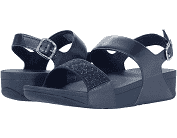
Patients with bunions are always challenged when it comes to finding comfortable shoes. They need a shoe that is protective and biomechanically controls the foot so that the bunion formation does not progress. They also need a shoe that does not apply pressure to the bunion, which can result it increased pain as well as
enlargement of the bunion. Patients who suffer with plantar fasciitis (heel pain) will also benefit from the shock absorption that this sandal provides.

What makes this sandal excellent is the thick, rigid sole that provides protection to the foot joints but is also is cushy enough to provide shock absorption. Although the sandal lacks forefoot strapping - it makes up for it with good midfoot and rearfoot strapping for more biomechanical control and, best of all, there is no pressure on the bunions or toes. 

I would highly recommend that you make sure that any Fit Flop that you purchase is a sandal with rearfoot strapping and not the Fip Flop with no rearfoot strapping. It makes a huge difference in comfort! Without rearfoot straps, you are forcing your toes to grip down to stay in the flip-flop, which aggravates forefoot issues such as hammertoes, bunions, calluses and metatarsalgia. It also forces your tendons, muscles and joints including your knees, hips and lower back to work harder to stay in the shoe, which causes more biomechanical pain and 'tired leg syndrome'.

To stop or slow the progression of bunions, it is imperative that you wear shoes with a thick, rigid sole, a wide soft toebox and shoes with some type of forefoot (if possible), midfoot and rearfoot biomechanical control. It's optimal to wear custom-molded orthotics and, although this sandal does not accommodate orthotics, the Fit Flop Sandal is an excellent choice.

This Shoe is Recommended for Patients with:
*Plantar Fasciitis (heel pain)
*Bunions
*Hammertoes
*Tailor's Bunions
*Metatarsalgia
*Capsulitis
*Mild Achilles Tendonitis 
*Mild Tendonitis 
*Corns and Calluses
*Hallux Limitus (limited range of motion of the 1st toe joint)
*Hallux Rigidus
*Osteoarthritis
*Rheumatoid Arthritis
*Ingrown Toenails
*Morton's Neuroma
*Fibromyalgia
*Mild Knee, Hip and Lower Back Pain


This Shoe is NOT Recommended for Patients with:
*Charcot Foot
*Patients with a history of Ulcerations or Open Sores
*Diabetics
*Peripheral Arterial Disease (Poor Circulation)
*Peripheral Neuropathy (Nerve Damage
*Hypermobility 
*Severe Overpronation
*Avascular Necrosis 


Have a lovely day!

Dr. Cathleen A. McCarthy

:)


Saturday, February 16, 2013

Z-Coils - Podiatry Recommended.

Z-CoiL Shoes.


If you're looking for a pretty shoe - this is not it. But, if you are looking for amazingly comfortable shoe for foot, heel, knee, hip and lower back pain - keep reading. 


The Z-CoiL shoes are not for everyone but they are excellent for anyone who works long hours on concrete floors and has 'tried everything to relieve their pain and nothing works'. It has a thick, rigid sole that, in some cases, is appropriate for treating certain foot fractures. The Z-CoiL offers supreme shock absorption for the heel, knees, hips and lower back.  It will accommodate a custom-molded orthotic and meets all the criteria required for comfort (i.e. thick and rigid sole, wide toebox, rearfoot control and arch support) plus the added feature of the massive coil for shock absorption for the joints. 

My biggest challenge with this shoe - is getting people to get past it's strange look and getting them to actually try it on! If you're suffering from chronic pain and nothing else has worked, do yourself a favor and find a store where you can try them on. You may be in for a pleasant surprise...


Z-CoiL Shoes are Recommended for Patients with:
*Plantar Fasciitis (Heel Pain)
*Hallux Limitus
*Hallux Rigidus
*Metatarsalgia
*Morton's Neuroma
*Mild to Moderate Bunions and Tailor's Bunions
*Mild to Moderate Hammertoes
*Capsulitis
*Tendonitis 
*Achilles Tendonitis
*Over-Pronators
*Sinus Tarsi Syndrome
*Osteoarthritis
*Degenerative Joint Disease 
*Patients recovering from Lisfranc's or Metatarsal Fractures
*Patients recovering from Heel Fractures 


Z-CoiL Shoes are NOT Recommended for Patients with:
*Weak legs 
*Muscle weakness
*Severe Hypermobility
*Anyone wearing an AFO (Ankle-Foot Orthosis)
*Balance Issues
*Neurological Conditions such as Drop-Foot
*Geriatric Patients 
*Charcot Foot

Check with your Podiatrist to find out if these shoes are appropriate with you if you have:
*Diabetes
*Peripheral Neuropathy (Nerve Damage)
*Peripheral Arterial Disease (Poor Circulation) 
*Any history of Ulcerations


I would love to hear how they work out for you!

Have a great day!

Dr. Cathleen A. McCarthy 

:) 


Monday, January 28, 2013

Podiatrist Recommended Running Shoe - Hoka

HOKA ONE ONE
Running Shoe


 Hoka One One Mafate

 Hoka One One Bondi B


Thanks to Linda for introducing me to the Hoka One One Running Shoe! 

This is my new favorite running shoe - especially for patients who love to run and need to protect their joints.

It has a thick, rigid sole that provides stability and control and yet is lightweight enough to help prevent leg fatigue. Because it is so oversized, it does well on smooth surfaces or uneven trails.  

The bottom line is: the more you protect your joints, the longer you will be able to stay active and enjoy life. I have many patients who would love to be more active but are limited by joint pain and damage. Protect your joints now so you can stay active longer!

Overall, it's a beautiful combination of support, control and lightweight construction. 

Bravo!

 Hoka One One Bondi B Running Shoe


Happy Trails!

Dr. Cathleen A. McCarthy

:) 


Saturday, January 5, 2013

Podiatrist Recommendations for Patients with Hallux Limitus who want fashion and height...

Podiatrist Shoe Recommendations 
for Patients with Hallux Limitus/Rigidus 
who still want height and fashion.

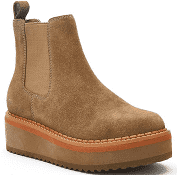
If you've been diagnosed with Hallux Limitus/Rigidus, you understand the frustration of having this condition when if comes to finding fashionable shoes. Getting diagnosed with Hallux Limitus doesn't mean that you're relegated to a life of orthopedic shoes. You simply need to understand exactly what you are looking for in a shoe so that you will be able to find something that is comfortable and suits your sense of style.

Hallux Limitus means that you have limited range of motion of the first toe joint whether it is from injury, arthritis, gout, degenerative joint disease or the genetic biomechanical structure of your foot. Hallux Rigidus means that the condition is so bad that you have no motion through the first toe joint. What this means is that if you try to wear any shoes with a heel, it results in significant pain and more injury to the already beleaguered joint. 

So, do you have Hallux Limitus, don't want to wear orthopedic shoes but would still love stand several inches taller?  A lovely website called Solestruck.com has a variety of shoes that fit the bill. I do not recommend all of their shoes (you'll understand why when you see all the 'Lady Gaga' shoes - love her music but not her shoes!) and I suspect you'll either love them or hate them. I think their shoes are awesome but I will confess that Callie, our office manager, shot me a look of horror when I showed her the shoes I was ordering. She claimed she would never wear them in a million years but did concede that she thought I could pull off the look (she then did a bee-bop imitation of me walking through the office in my new shoes) saying that Dr. McCarthy has her own sense of style, which includes not caring what anyone thinks, which I took as a compliment! Another confession - Callie is much cooler than me so don't say I didn't give you a heads-up...   :)
 
  
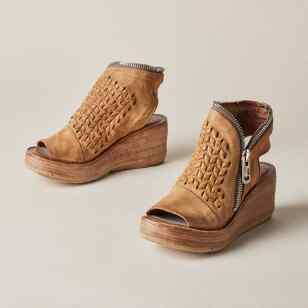
Patients with Hallux Limitus/Rigidus need four things in a shoe:

1. A thick, rigid sole with no motion. If you can bend of flex the shoe, it is not good enough for you and will cause more pain and damage to the joint.

2. A wide and preferably soft toe-box so there is no pressure on the toes. As a side note, this is particularly important if you are trying to treat a fungal infection of the toenails (please see my article on this blog about toenail fungus by using the search box). It is also important for anyone suffering with painful hammertoes, bunions, corns, Morton's Neuromas, ect.

3. Rearfoot Control. It's important that every shoe have at least a strap around your rearfoot. Otherwise, you are forcing all your tendons, joints, ligaments, and muscles to work harder to stay in the shoe, which causes a variety of problems including 'tired leg syndrome' as well as knee, hip and lower back pain. If you don't have rearfoot control, you are gripping down your toes to stay in the shoe, which is aggravating your Hallux Limitus condition.

4. Arch Support. I would recommend that your add a custom-molded dress orthotic to these shoes to give you more arch support, which will help with stopping or slowing the progression of your Hallux Limitus/Rigidus condition as well as help with knee, hip and lower back pain. Many insurance companies will pay for custom molded inserts because they understand that getting patients into proper inserts helps to prevent surgery. If you are a patient of ours, please call Callie (480-563-5115) and ask her to check with your insurance company to see if this benefit is covered.   
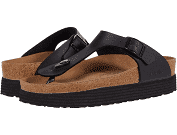
One final note, some of you may not like the looks of these shoes but - don't knock 'em till you try 'em! I have a patient who is a young, stylish and active woman who has such severe Hallux Rigidus that the only shoe she was able to wear comfortably was a leopard-skin pattern fuzzy bedroom slipper because it had a thick, rigid sole similar to the ones below. She wore that bedroom slipper with every outfit for over a year until she found something that was similar to the below shoes that she could wear with comfort! They are hard to find but they are out there so - don't give up! If you don't like these, keep looking till you find something that you like that has a thick rigid sole, wide toebox, arch support and rearfoot control. 


Jeffrey Campbell - Mad Man
The Damned


Jeffrey Campbell - Weller


August
 

Plateau Jung
Minimarket


Slingback Platform Sneaker
Opening Ceremony


June


I hope this was helpful and I wish you a Healthy, Fun, Active
Happy New Years!!


Dr. Cathleen A. McCarthy


:)