Podiatrist Recommended
Top 30 (Plus!)
Comfortable Sandal List
Summer 2016
My summer sandal list is chock-full of options for those of you looking for a good-looking summer sandal that feels good on your feet. The recommendations are pathology specific, so what works for one foot type doesn't always work for a different foot type or pathology. I will offer tips for picking the best sandal for you. Keep in mind that, no matter what I recommend, the shoe must feel good on your feet. If the shoe is not comfortable on your feet then that shoe is not for you.
For a shoe to be comfortable it must meet four criteria. You can get any shoe you want as long as the shoe meets the four criteria of what makes a good shoe and it passes the acid test - it has to feel good on your feet!
The four criteria a shoe must have to be comfortable are:
1. A thick, rigid and non-flexible sole. This is crucial. If you are wearing a shoe with a sole that you can bend or is flexible, then you are setting yourself up for arthritic joint changes, injuries and stress through joints, tendons, ligaments as well as knee, hip and lower back issues. The concept is counter-intuitive, but having a shoe sole that is thick, rigid and non-flexible will put less motion through your foot joints. Less motion through your foot joints translates into less inflammation, swelling, injury and biomechanical strain. If you are recovering from a foot injury or foot pain of any type, the last thing that you want to do is force motion through the area of previous injury or current pain. If you are skeptical, give it a try and judge for yourself.
2. A wide, soft toebox with as little pressure on the toes as possible. Pointy-toed shoes or ill-fitting, tight toeboxes can cause painful and cosmetically unpleasing bunions, hammertoes as well as corns and calluses.
3. Rearfoot Control. At the very least, you need to wear a shoe with a rearfoot strap. You will notice that there are no flip-flops or mules on any of my shoe lists. Without rearfoot control, you are forcing all of you tendons, ligaments and joints to work harder to stay in the shoe, which causes mechanical strain and can contribute to knee, hip and lower back issues. Also, without rearfoot control, you are forced to scrunch down you toes to stay in the flip-flop, which will speed up the progression of hammertoes and bunions.
4. Arch Support. Ideally, you want to wear arch support, but in sandals that is not always possible. Arch support, in the form of over-the-counter products or custom-molded orthotics, can help to control over-pronation and decrease mechanical strain on the foot joints as well as the knees, hips and lower back. Ten percent of patients cannot tolerate arch support, so if arch support hurts your feet you might be one of the ten-percent of patients who should not wear arch support. Be aware that if your arch support hurts, then you might have it in the wrong shoe or you might have the wrong arch support. Talk to your podiatrist about what type of shoes and arch support are appropriate for your foot type.
Sandals are not appropriate for patients with:
*Diabetes
*History of Foot Ulcerations or Open Sores
*Neuropathy (Nerve Damage)
*Peripheral Arterial Disease (Poor Circulation)
*Charcot Foot
*Custom-molded Ankle-Foot Orthosis
*Drop Foot
If there is any doubt about what type of shoes are appropriate for you, I recommend that you make an appointment with your local Podiatrist for a biomechanical evaluation. Avoid surgery and opt for conservative treatment options first. The goal of foot surgery is to take an abnormal, painful foot and turn it into an abnormal, non-painful foot. You should exhaust conservative treatment before you consider foot or ankle surgery.
Ash Vera Crackled Leather Sandal
Ash Vera Crocodile Embossed Leather Sandal
I am loving the Ash sandals! They both are nice adaptations of the Birkenstock and, in my eyes, I like how funky cool they look. They meet the four criteria of what makes a comfortable sandal and they have the added benefit of possibly being able to accommodate your dress custom-molded orthotic. If you have severe over-pronation, the high interior edge might cause skin irritation, blisters or pressure which is uncomfortable. If you have ligament laxity, hypermobility or instability of the ankles (rolling outward) and a history of ankle sprains, the high outside flair should help to hold your foot in a more stable position.
Birkenstock Milano Soft Footbed Super Grip Shoes
The Birkenstock Milano is a great choice for almost any foot type. The thick, rigid sole is covered with a soft footbed for added comfort and the straps are all adjustable so you can get a better fit. This is the perfect sandal for anyone with Hallux Limitus (limited range of motion through the 1st toe joint), Osteoarthritis of the forefoot and midfoot joints, plantar fasciitis (heel pain), mild over-pronation, Morton's Neuroma, metatarsalgia and plantar plate injuries (to name a few). This may not be the best choice if you have chronic Achilles tendon issues as you will need a sandal that has a slightly higher heel in the back so there is less tension on the Achilles tendon.
Born Bastille Sandals
I love the look of the Born Bastille sandals! The thick, rigid and non-flexible sole is perfect for anyone with Hallux Limitus, Functional Hallux Limitus, metatarsalgia, Osteoarthritis of the toe joints and history of a previous Lisfranc's injury. This sandal also is a good choice for anyone with heel pain.
Born Emmy Sea Green
I love this look and wore this heel height and brand for many years. If you are able to wear this heel height comfortably then this shoe should work for you. At some point in your life, you will no longer to be able to comfortably handle the heel height and you will have to transition into a lower heel. Your body will tell you when you hit that point and then you just make the change into...
Born Lucee
A lower heel! I think this sandal is adorable. It doesn't have arch support, so if you have severe over-pronation, this sandal might not work for you.
Born Petulla
Born Tera
Circus by Sam Edelman
Clarks Caslynn Shae
Clarks Clarene Award
Dirty Laundry Ballroom
HKR Sandals
I love the look of this sandal and, with a price tag of thirty dollars, it's a steal. It does come in limited sizes, so if you like it, get it quick.
Clarks Hazelle Amore
Kenneth Cole Reaction Pepe Pot
Clarks Auriel Finn
Alegria Verona Sandal
The Alegria sandals has a sturdy sole with a wide base that helps with stability. This is a good pick for anyone who has Functional Hallux Limitus (decreased range of motion through the 1st toe joint), plantar fasciitis (heel pain) as well as knee, hip and lower back issues.
Birkenstock Sydney Sandal
This is a great choice for anyone with large bunions and severe hammertoes that do not comfortably fit in enclosed shoes or sandals with forefoot strapping. Although I typically like sandals to have more forefoot control, that is not always an option if you have large, painful bunions and hammertoes.
Chaco Z1 Sandal
This is an excellent choice for the beach. It is an amphibious sandal as you can wear it on the beach as well as in the surf. I highly recommend that you wear an amphibious sandal when you go in the surf at the beach. It will help prevent injuries such as stepping on broken glass, coral, sea urchin spines and sharp rocks.
Dirty Laundry Gung Ho
Kork-Ease Myrna 2.0 Metallix Wedge
Kork-Ease Ava
I recommend that you try the higher-heeled sandals on at the store to make sure that they are comfortable. These can be found at Dillard's as well as other major department stores.
Mephisto Barbara Wedge Sandal
This sandal works better on tiny petite women who are not over-weight. My experience has been that the sole in the forefoot of this shoe starts to break down a little quicker than it should if you are heavier. The patients who are petite tend to do well with this shoe for a longer amount of time than the more voluptuous, Rubenesque women.
Naot Paris
Naot Kayla Sandals
The Naot sandals are wonderful! The Naot Kayla offers similar benefits as the Birkenstock Milano sandals (reviewed above). It has excellent strapping for more biomechanical control and a thick, rigid sole covered with a soft topcover for more comfort. The Naot Paris has a topcover with more cushioning than the Naot Kayla and is excellent for anyone with painful calluses.
Steve Madden Nylee Flatform Wedge Sandals
You're going to have to try this one on at the store to see if it works for you. I wish it had an extra midfoot strapping for more biomechanical control, but I do love the look and this should work for some patients. I do not recommend this sandal if you have balance issues or you know you are going to be walking on uneven surfaces like cobblestone. This wedge sandal will work best on flat, even surfaces such as concrete floors. This sandal is also not ideal for anyone with moderate to severe over-pronation as there is no arch support.
Wolky Jewel
A classic and my personal favorite! This in one of the best sandals you can get. Make sure that when you purchase it that you double- check that the sole does not bend or flex as quality with any shoe can vary. Always get the shoe with the sole that bends and flexes the least.
Wolky Lily
Wolky Rio White Crush Suede
Keen's Newport H2
Keen's Newport H2 is a great option for an amphibious sandal to wear to the beach. Wear it in the sand and in the surf to help prevent foot injuries and pain. This is also the sandal that I recommend for patients who do water aerobics to help protect the feet while in the pool.
Dansko Lolita
Dansko Stevie
The Dansko brand is not for every foot type or every patient, but they can be an excellent shoe for anyone with Functional Hallux Limitus (limited range of motion through the 1st toe joint), Osteoarthritis of the toe joints, a history of a previous Lisfranc's injury and heel pain (to name a few). I highly recommend that you try on the Dansko shoes in the store to see if they are right for you. Dansko sandals work best when you are walking on hard, flat surfaces such as concrete. They do not work well on cobblestone or severely uneven surfaces.
Fly London Yito
Fly London Yuta
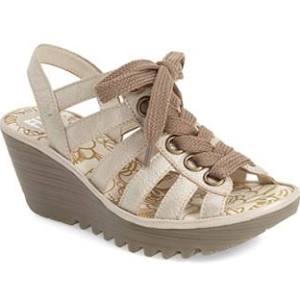
I love the look of the Fly London sandals! I have many patients who swear by them, but they do not work for everyone. My personal experience was that I found that the forefoot was a tad too narrow for my foot. I highly recommend that you go to the store and try these on to ensure a comfortable fit. These shoes are an excellent choice for anyone with heel pain and a history of mild Achilles issues in the past. They also work well for some patients with mild Functional Hallux Limitus (limited range of motion of the 1st toe joint). The Fly London sandals have a rigid and non-flexible sole and they have the added benefit of extra-cushion within the sole for added shock absorption.
Fit Flop Sandals
The Fit Flop sandals are a great pick for anyone with large bunions that hurt with any pressure. When you purchase the Fit Flop sandals, make sure that you double-check that the sole is rigid and not flexible. Quality can vary greatly! If you get one that has a flexible sole (especially in the forefoot area) do not purchase it. Keep looking until you find one that offers no motion through the forefoot area. Remember that the more rigid the sole is -- the more comfortable the sandal will be and it will also last longer. The Fit Flop sandal is a good choice for anyone with Functional Hallux Limitus (limited range of motion through the 1st toe joint), Morton's Neuroma, metatarsalgia, plantar fasciitis (heel pain) and painful 5th hammertoes with corns. They are not the optimal choice for anyone with severe over-pronation as there is very little arch support.
Naturalizer Ardel Wedges
If you know that you can handle this heel height, this Naturalizer sandal should be comfortable for you. I like the wider strapping in the rearfoot and the extra cushioning in the footbed.
Ash Fool Platform Sneaker
Okay, it's not a sandal, but it is adorable!
* * * * *
I hope that this list was helpful and, if you need more information, please refer to my other articles on this blog:
My Feet Hurt: Top 10 Things To Do To Alleviate Foot Pain Today.
Shoe Recommendations For Patients Recovering From Lisfranc's Injuries.
I'd love to hear your feedback on any of these shoes and, if you ever want to thank me for any help that I've been able to offer you - the nicest thing you could do for me is, if you enjoy detective murder mystery novels, I would love it if you would read my novel 'Gunning For Angels' and give me an honest review on Amazon. As much as I love writing this blog and helping people with their foot pain, I love writing detective murder mystery books even more. Fair warning, the book is rated-R so, if that is not your cup of tea, you can choose to thank me by sharing my blog on your social media. Or you can just kick your feet up, relax and watch a good movie. I'm enjoying one of my favorites right now - Ricky Gervais and Tea Leoni in Ghost Town. I particularly love Kristine Wiig's performance as a hospital surgeon who has to tell her patient that there was a slight glitch during his surgery - he died for seven minutes and now he can see ghosts. Fun stuff!
Thank you and have a lovely day!
Dr. Cathleen A. McCarthy
:)